
Dubai is Changing its Street Signs! Check if Your Area is Included
Dubai is introducing a new colour-coded street sign system across 186 areas, bringing a fresh look to neighbourhood streets, commercial districts and house number plates. The initiative aims to make it easier for residents, tourists, motorists and delivery drivers to identify locations across the emirate.
Announced by Dubai’s Supreme Committee for Urban Planning in coordination with the Roads and Transport Authority (RTA) and Dubai Municipality, the project will introduce new sign designs, area-specific colours and QR codes. The first phase scheduled to begin in the fourth quarter of 2026, with more than 2,000 signs planned for five areas.
The wider rollout will continue in phases until 2030, making this an important update for anyone living in, visiting or navigating Dubai.
| Feature | Details |
| Project | Dubai’s new addressing and street sign system |
| Areas covered | 186 areas |
| Sectors | 19 |
| First-phase signs | More than 2,000 |
| Rollout begins | Fourth quarter of 2026 |
| Expected completion | 2030 |
| New design | Five area-specific colours |
| House number plates | Redesigned plates with Makani numbers and QR codes |
| Authorities | Supreme Committee for Urban Planning, RTA and Dubai Municipality |
Which Dubai Areas will get New Street Signs First?
The first phase of Dubai’s new street sign project will focus on five areas. More than 2,000 signs will be installed or replaced as part of the initial rollout.
The first five areas are:
- Za’abeel 1: One of the first neighbourhoods included in the new sign programme.
- Za’abeel 2: Set to receive redesigned street signs under the initial phase.
- Nad Al Sheba: Included in the first group of areas receiving the new signage.
- Al Khawaneej 1: Will be part of the first-stage implementation.
- Nazwa: Also included in the initial rollout.
The remaining areas will be covered gradually as the project progresses. The full programme designed to cover 186 areas across 19 sectors (includes internal streets, house number plates & commercial districts) of Dubai by 2030.
- Dubai RTA Fines: How to Check and Pay Online
- Dubai RTA Mobile Vehicle Inspection: How to Test your Car from Home?
- RTA Vehicle Renewal: How to renew, procedure, Requirements, Fees
What Changes are Coming Under Dubai’s New Addressing System?
Dubai’s Supreme Committee for Urban Planning, working alongside the Roads and Transport Authority (RTA) and Dubai Municipality, is introducing a standardised design for signs used to identify neighbourhoods, streets and properties across the emirate.
The main updates include:
1. Community identification signs: Redesigned signs to help residents and visitors recognise different communities and neighbourhoods.
2. Internal street name signs: Updated signage displaying street names within residential communities and other areas.
3. House number plates: New designs featuring property Makani numbers and QR codes to make locations easier to identify.
4. QR codes for digital information: Scannable codes that provide additional details about locations, street names and nearby points of interest.
The new signage will use coordinated designs and area-specific colours to create a more consistent addressing system across Dubai, helping residents, tourists and delivery drivers navigate the city more easily.
What are Dubai’s New Colour-Coded Street Signs?
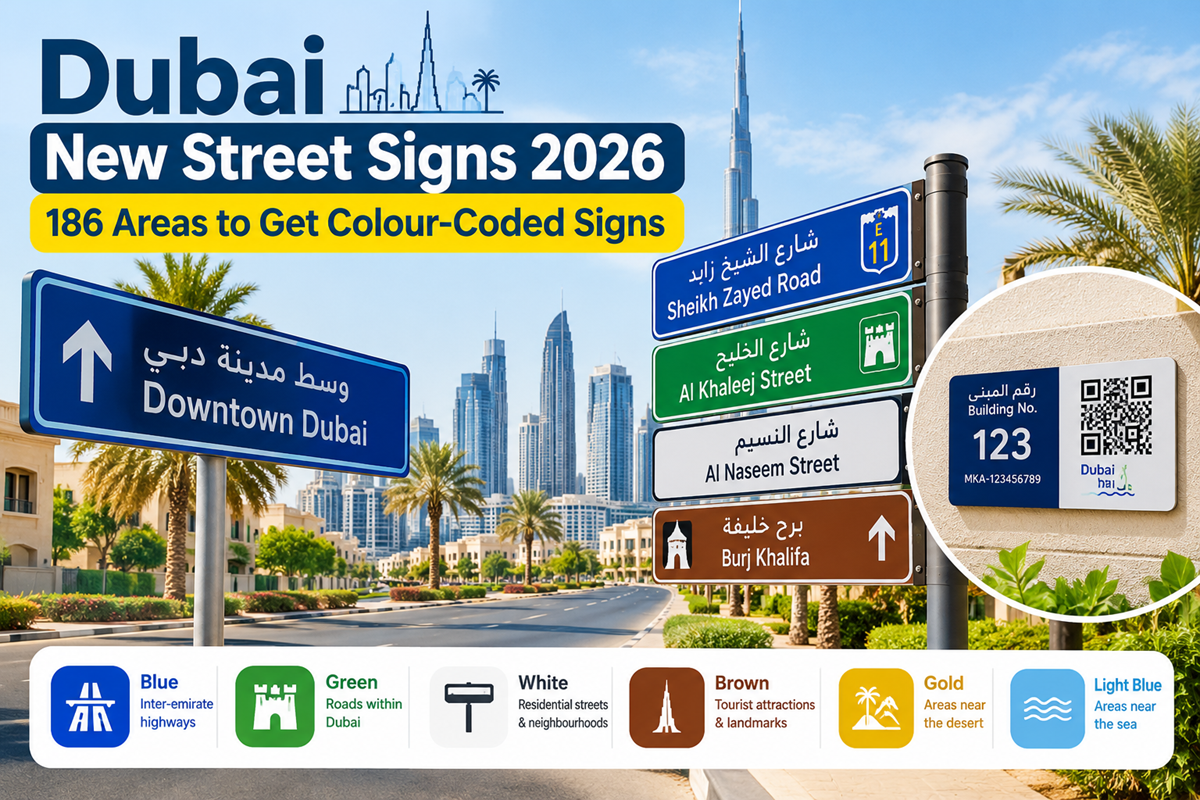
The new system will introduce five colours designed to reflect the geographical characteristics and identity of different neighbourhoods.
The updated design will apply to area identification signs, internal street name signs and house number plates.
Residents should note that this initiative concerns neighbourhood identification and addressing. It should not be confused with a general replacement of Dubai’s existing highway navigation signs.
What do Dubai’s Existing Road Sign Colours Mean?
Dubai’s newly announced addressing project focuses on community identification signs, internal street names and house number plates. It does not indicate that the emirate’s existing colour-coded highway navigation system will replace.
Dubai already uses different sign colours to help motorists identify road networks and navigate between emirates, within the city and towards tourist destinations.
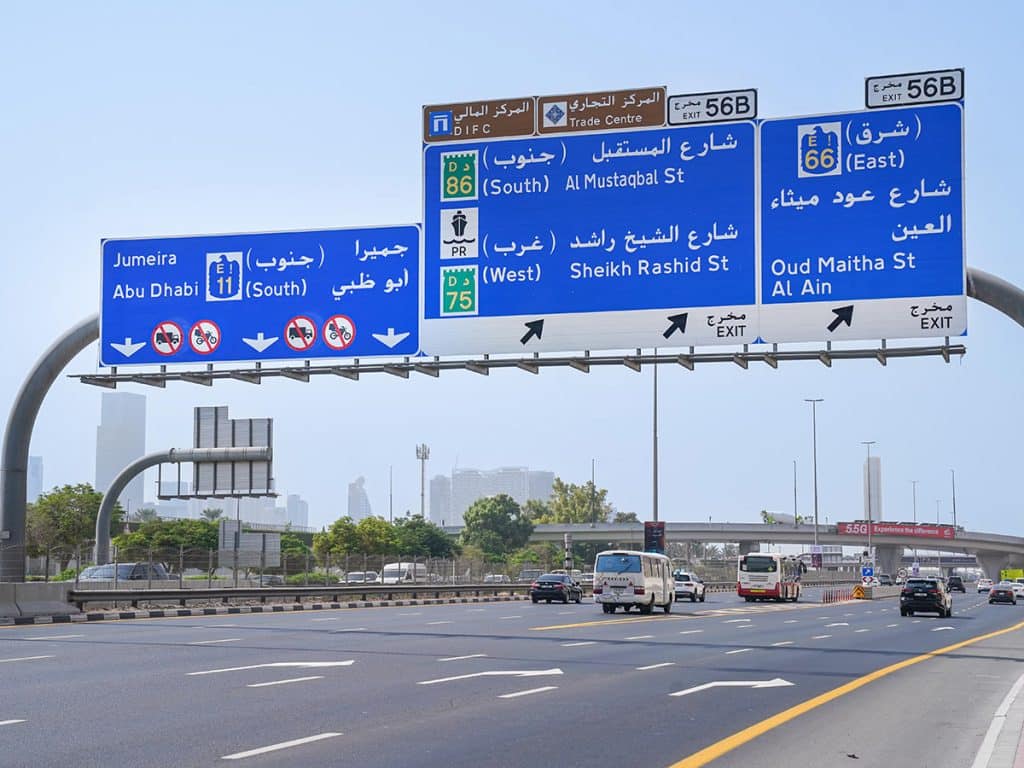
Blue Signs – Roads Connecting Different Emirates
Blue signs used to identify inter-emirate roads, commonly known as E Routes, which connect different emirates across the UAE. These signs help motorists recognise major highways, including Sheikh Zayed Road (E11) and Emirates Road (E611), when travelling between locations.
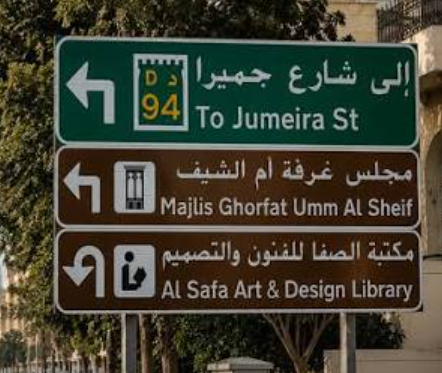
Green Signs – Roads Within Dubai
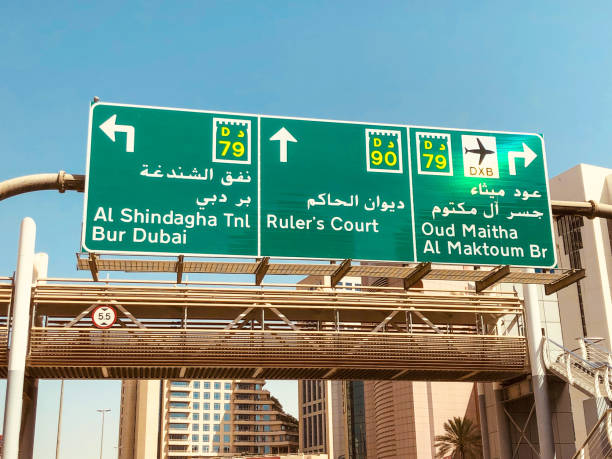
Green signs identify Dubai’s internal road network, commonly known as D Routes. They help drivers navigate roads connecting different neighbourhoods and key locations across the emirate. These signs feature Dubai’s road emblem, represented by a castle, helping motorists distinguish Dubai’s road network from inter-emirate routes.
White Signs – Residential Streets and Neighbourhoods
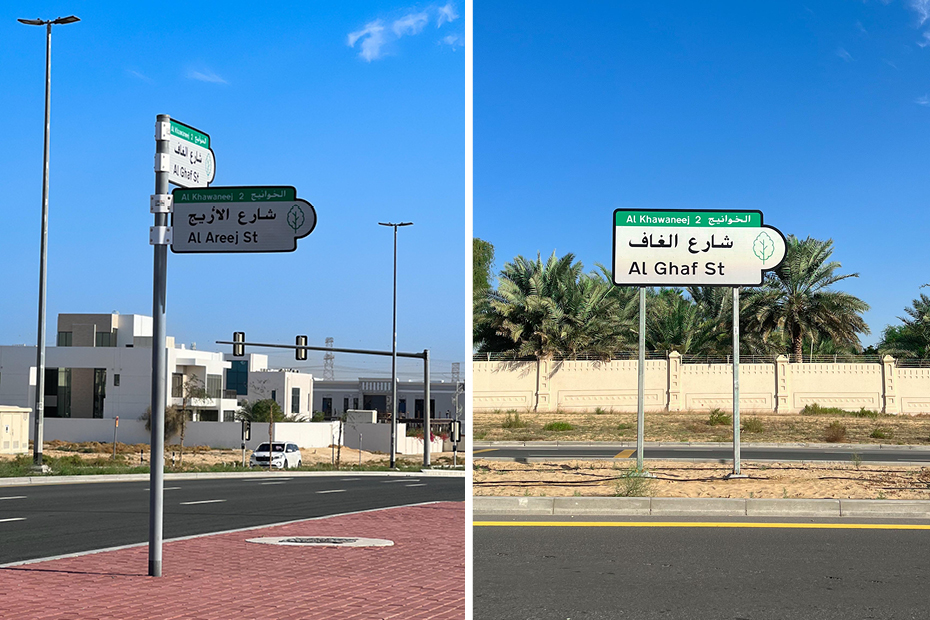
White signs commonly used to display street names within residential communities and neighbourhoods across Dubai. They help residents, visitors, delivery drivers and other road users identify individual streets and find specific addresses more easily.
Brown Signs – Tourist Attractions and Landmarks
Brown signs guide motorists towards tourist attractions, historical landmarks and other places of interest across Dubai. These signs may include symbols or pictograms to help drivers recognise the type of attraction and follow directions to popular destinations.
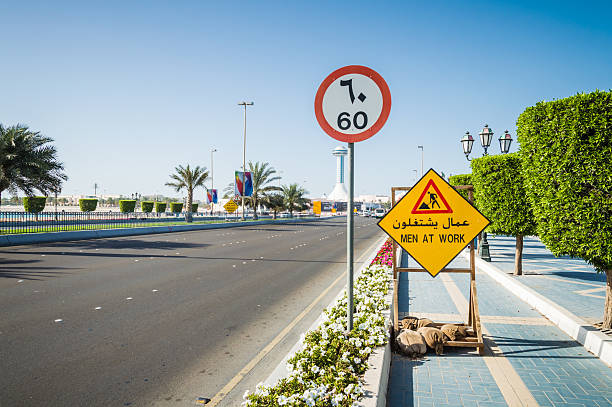
Yellow / Orange Signs – Road warnings
A yellow or orange sign on a Dubai road indicates a warning, temporary diversion, roadworks, or a local residential street zone.
How will QR Codes on Dubai Street Signs Work?
QR codes are another important feature of the new addressing system. They are intended to connect physical street signs with digital location information.
By scanning a QR code with a compatible smartphone, users will be able to access relevant information about the area, including:
- The sector and neighbourhood where the sign is located.
- Information about street and area names.
- Nearby landmarks and points of interest.
- Other location-related details provided through the system.
The project also expected to extend the new visual identity to bus stops, smart applications and area map boards in later phases.
For tourists, delivery drivers and people unfamiliar with a neighbourhood, the digital information could make it easier to identify destinations and understand local addresses.
New Dubai House Number Plates to Feature Makani Numbers
Dubai’s new addressing system will also introduce redesigned house number plates. These plates will feature each property’s Makani number alongside a QR code, with colours matching the designated identity of the area.
Makani is Dubai’s geographic addressing system, which uses a unique 10-digit number to identify a specific location.
The updated house plates are intended to support clearer location identification and help residents, visitors and service providers find properties more easily. The new designs will be approved by Dubai’s RTA and Dubai Municipality.
When Will Dubai’s New Street Sign Changes Begin?
The project will be implemented in phases, beginning in the fourth quarter of 2026 and continuing through 2030.
The first phase will cover Za’abeel 1, Za’abeel 2, Nad Al Sheba, Al Khawaneej 1 and Nazwa, with more than 2,000 signs planned for installation or replacement.
The rollout will subsequently expand to other areas across the emirate. The timing of changes in individual neighbourhoods will depend on the implementation schedule.
Residents do not need to assume that all street signs or house plates will change at once. The programme designed as a phased upgrade rather than a single citywide replacement.
Why is Dubai Introducing New Street Signs?
Dubai’s new addressing system intended to improve navigation while giving neighbourhoods a more consistent and recognisable visual identity.
The main expected benefits include:
i) Easier navigation: Updated street and area signs can help residents and visitors identify locations more clearly.
ii) Better address identification: Redesigned house plates and Makani numbers can help people locate specific properties.
iii) Digital location information: QR codes will provide additional details about neighbourhoods, street names and nearby points of interest.
iv) A consistent citywide design: A unified system can make signage more recognisable across residential communities and commercial districts.
v) A stronger neighbourhood identity: Area-specific colours will reflect the geographical features and character of different parts of Dubai.
The initiative forms part of Dubai’s wider efforts to keep its urban infrastructure and addressing systems aligned with the emirate’s continued development.
What Dubai Residents and Visitors Should Know?
If you live in Dubai or plan to visit, the new street signs are worth watching as the rollout begins.
Residents in the five initial areas may see redesigned street signs and house plates introduced first. People in other neighbourhoods can expect changes as the project expands over the coming years.
For now, continue using existing street signs, recognised addresses and Makani numbers when navigating the city. The new system will introduce progressively, and the exact timing for each location may vary.
For the latest official announcements, check updates from the Dubai Media Office, Dubai RTA and Dubai Municipality.
FAQ
1. How many areas in Dubai will get new street signs?
- Dubai’s new addressing system will cover 186 areas distributed across 19 sectors.
2. Which areas will get Dubai’s new street signs first?
- The first phase includes Za’abeel 1, Za’abeel 2, Nad Al Sheba, Al Khawaneej 1 and Nazwa.
3. When will Dubai start installing the new street signs?
- The phased rollout scheduled to begin in the fourth quarter of 2026 and continue through 2030.
4. How many new street signs will be installed in the first phase?
- More than 2,000 signs are planned for installation or replacement in the five initial areas.
5. Will Dubai’s new house plates have QR codes?
- Yes. The redesigned house number plates will include a property’s Makani number and a corresponding QR code.
6. Will the new Dubai street signs help tourists?
The updated signs and QR codes are intended to make it easier to identify neighbourhoods, locate properties and access information about nearby landmarks and points of interest.
Bottom line
Dubai’s new colour-coded street signs will gradually transform neighbourhood identification across 186 areas by 2030. With more than 2,000 signs planned in the first five areas, the project aims to improve wayfinding, address identification and the visual identity of the city.