
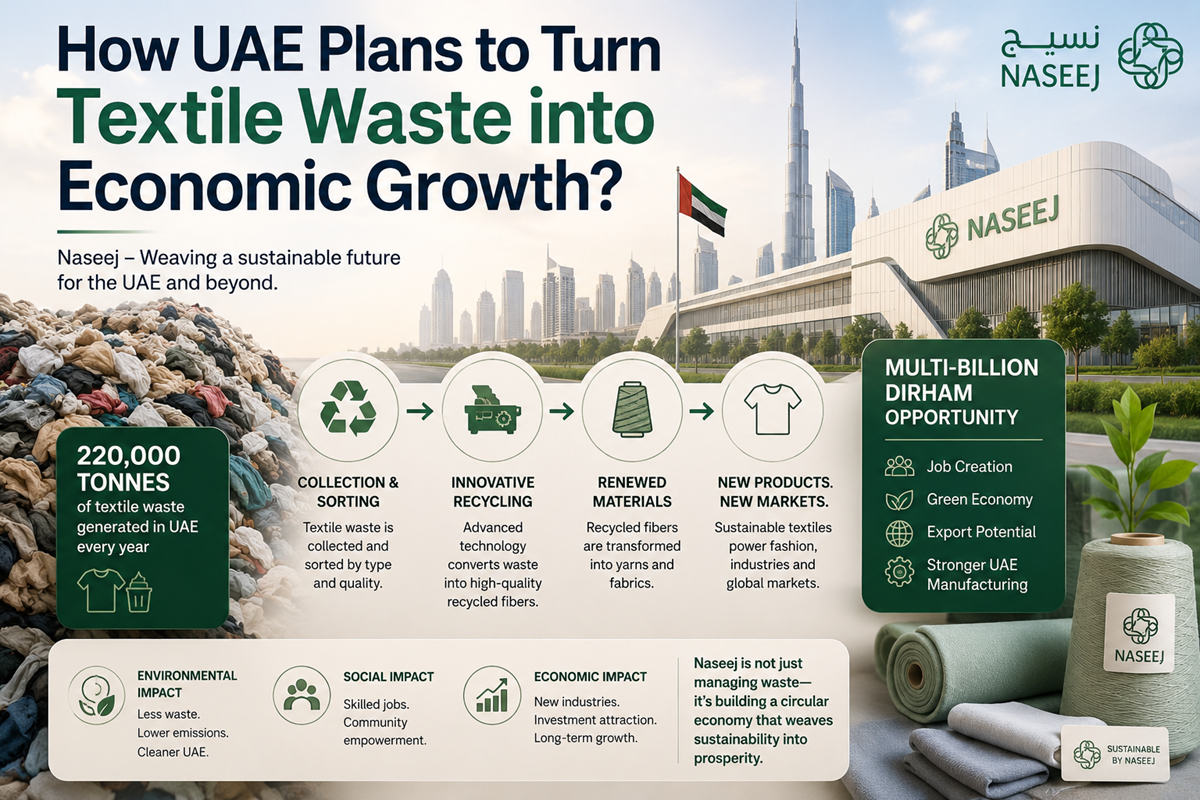
UAE Textile Recycling Initiative 2026: How ‘Naseej’ Could Turn 220,000 Tonnes of Waste Into a Multi-Billion Dirham Opportunity?
The UAE is taking a major step toward building a circular economy with the launch of Naseej – the National Initiative for Textile Circularity. Government leaders say the program could transform the country’s growing textile waste problem into a powerful economic opportunity by recycling, remanufacturing, and reusing discarded clothing and fabrics.
UAE Targets 220,000 Tonnes of Textile Waste Every Year
According to UAE officials, the country generates approximately 220,000 tonnes of textile waste annually, much of which currently ends up in landfills. Through the Naseej initiative, authorities aim to significantly reduce this volume by creating a nationwide system for textile collection, sorting, recycling, and reuse.
📅 Announcement Date: June 2026
📍 Location: Abu Dhabi
♻️ Program: Naseej – National Initiative for Textile Circularity
👔 Annual Textile Waste: 220,000 tonnes
💰 Goal: Turn textile waste into economic value and sustainable resources
Why the UAE Sees Textile Waste as an Economic Asset
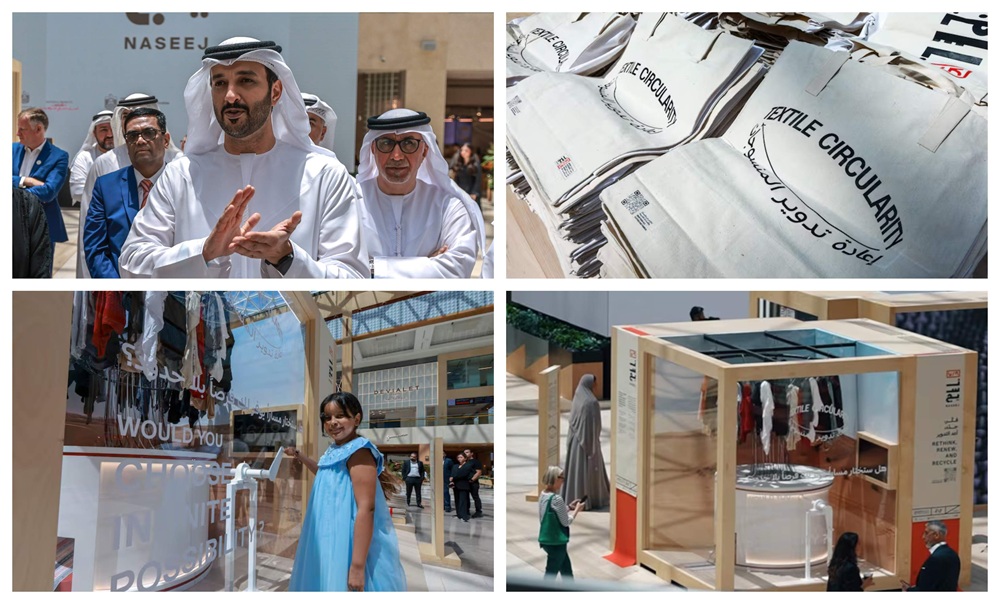
Speaking during the “Fabric of Possibility” community event at Yas Mall, UAE Minister of Economy and Tourism, Abdulla bin Touq Al Marri, emphasized that discarded textiles should no longer be viewed simply as waste.
Instead, old clothing, linens, towels, and fabrics can be recycled into new products, raw materials, and manufacturing inputs that support economic growth while reducing environmental impact.
What is the Naseej Initiative?
Naseej is a national platform designed to unite policymakers, manufacturers, retailers, recyclers, researchers, and consumers under a common textile sustainability strategy. The initiative aims to:
- Improve textile collection systems
- Expand sorting and recycling infrastructure
- Support textile remanufacturing projects
- Encourage responsible consumer behavior
- Advance research and innovation in sustainable materials
- Reduce landfill dependency across the UAE
How Residents can Participate?
As part of the launch campaign, residents received reusable “Bag of Possibility” bags made from upcycled kandura fabric and jute canvas.
People can fill these bags with:
- Old clothes
- Towels
- Bed linens
- Unwanted textiles
- Fabric-based household items
The materials can then be returned through participating collection partners and recycling points across the UAE.
Environmental and Economic Benefits
The initiative supports the UAE’s broader sustainability agenda by moving away from the traditional “take-make-dispose” model toward a circular economy.
Potential benefits include:
- Reduced landfill waste
- New recycling and manufacturing industries
- Job creation in sustainable sectors
- Greater resource efficiency
- Economic diversification opportunities
- Lower environmental impact from textile disposal
UAE’s Long-Term Circular Economy Vision
Officials say Naseej will boost recycling infrastructure, encourage responsible consumption, and develop scalable circular solutions for the textile industry. The initiative aligns with the UAE’s wider strategy of balancing economic growth with sustainability and resource efficiency.
🚀 Planning to Start a Business in Dubai? Here’s What You Need to Know
👨🍳 Want to Start a New Cooking Business or Cooking Class in Dubai: Licenses, Costs & Requirements
👤 Register as a Sole Trader in Dubai
🏪 How to Rent a Kiosk in Dubai for Your Business
📢 Starting an Advertising Company in Dubai: Licensing, Costs & Setup Process
📄 How to Apply for a New Trade License in Dubai and Complete the Renewal Process
Final Thoughts
With 220,000 tonnes of textiles discarded each year, the UAE sees a significant opportunity to transform waste into economic value. Through Naseej, the UAE aims to become a regional leader in textile recycling and circular economy innovation. The initiative could reduce waste, create jobs, and drive long-term green economic growth.