
Dubai’s First Pocket Forest Is Now Open at Expo City – Here’s Everything You Need to Know
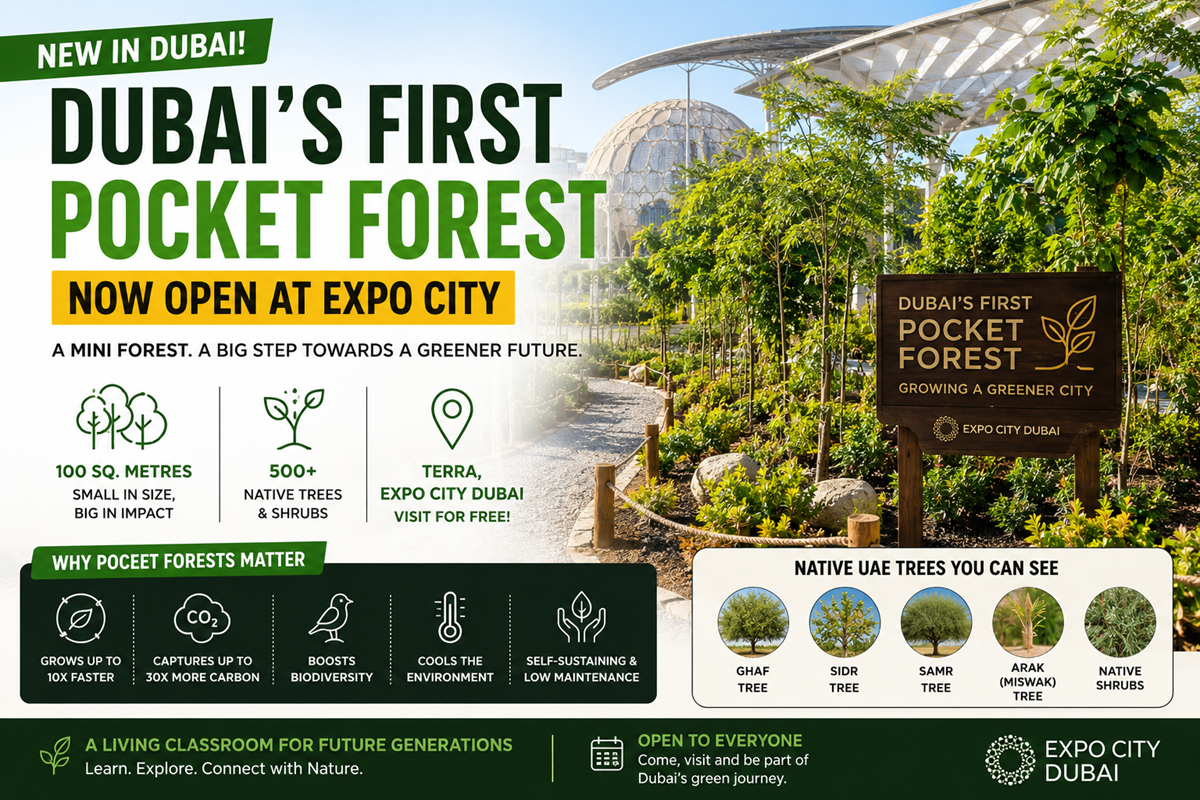
Dubai has taken another major step toward sustainable urban development with the opening of its first native pocket forest at Terra, Expo City Dubai. Despite covering just 100 square metres, this innovative green space is home to more than 500 native trees and shrubs, proving that even compact urban areas can support thriving ecosystems.
Designed as both an environmental and educational project, the pocket forest offers visitors a chance to experience the UAE’s native biodiversity while learning about sustainable landscaping techniques that could shape the future of greener cities.
Dubai’s Pocket Forest
A pocket forest—also known as a mini forest or micro forest—is a dense collection of native plants grown in a relatively small space using the internationally recognised Miyawaki Method, developed by Japanese botanist Akira Miyawaki.
Unlike traditional parks, pocket forests are planted very closely together in specially prepared soil. This allows the vegetation to grow significantly faster while naturally creating a self-sustaining ecosystem that requires minimal maintenance after establishment.
Where is Dubai’s First Pocket Forest Located?
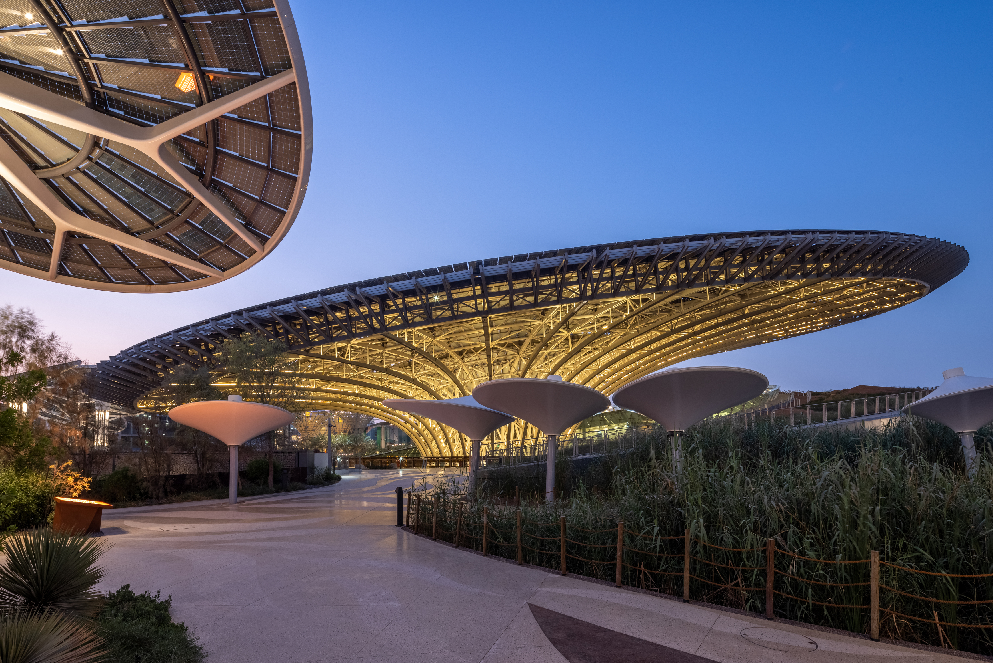
The pocket forest is located at Terra – The Sustainability Pavilion in Expo City Dubai.
One of the biggest attractions is that the forest itself can be viewed free of charge, even though some indoor Terra exhibits require paid admission. Visitors simply need to head to Terra within Expo City Dubai to experience this unique environmental initiative.
Native UAE Trees Featured in the Pocket Forest
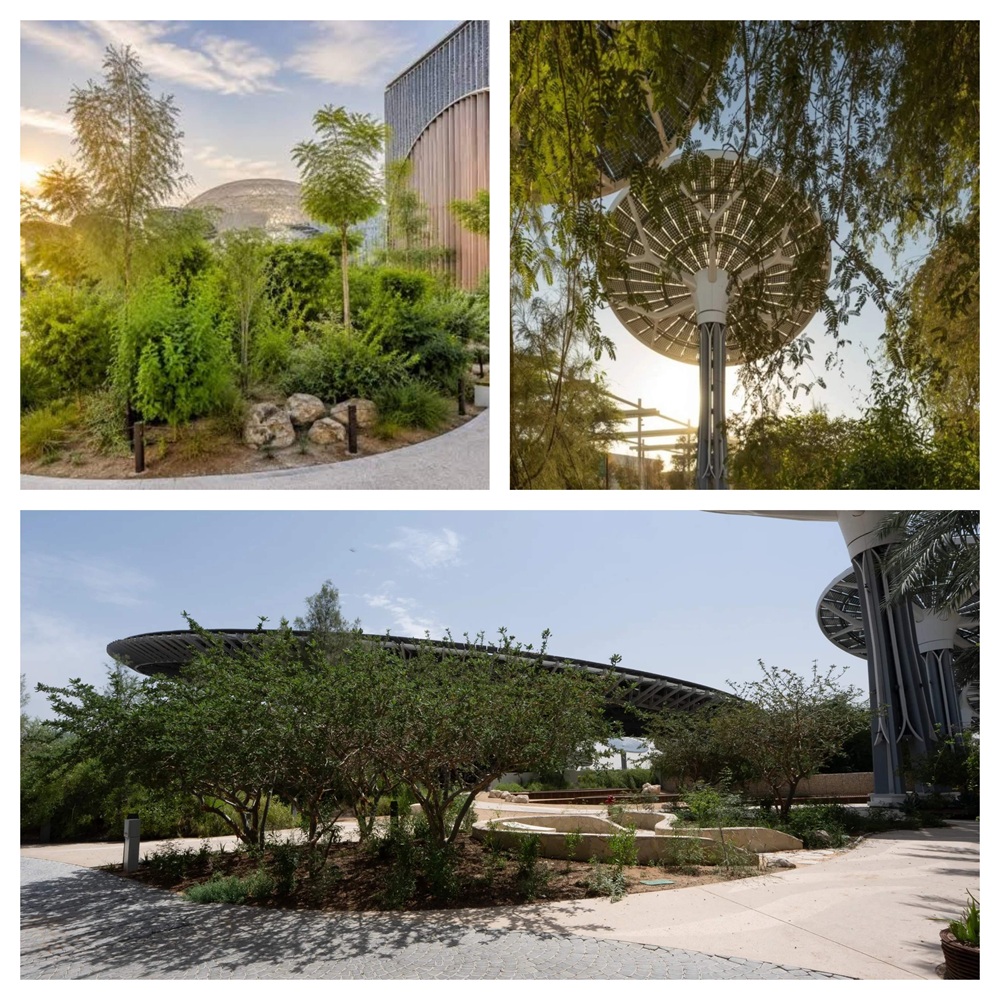
The forest showcases species naturally adapted to the UAE’s desert climate, including:
- Ghaf trees
- Sidr trees
- Samr trees
- Arak (Miswak) trees
- Native shrubs
- Ground-cover plants
These species were carefully selected to improve biodiversity while preserving the country’s natural botanical heritage.
Advantages of Pocket Forests
Pocket forests deliver impressive environmental benefits despite their small footprint.
- Grow up to 10 times faster than conventional forests
- Capture up to 30 times more carbon
- Increase urban biodiversity
- Improve air quality
- Reduce surrounding temperatures
- Require very little maintenance after establishment
- Support birds, insects, and beneficial wildlife
Because they occupy minimal land, they can also be replicated in schools, residential communities, museums, office parks, and public spaces.
A Living Classroom for Future Generations
Beyond its environmental value, Dubai’s first pocket forest has been designed as a living classroom. The initiative encourages children, students, and visitors to reconnect with native UAE plant species while learning about sustainability, conservation, and climate resilience.
The first saplings were planted as part of the lasting legacy of the International Council of Museums (ICOM) Dubai 2025, in collaboration between Dubai Culture and Expo City Dubai.
Why this Project Important for Dubai?
Dubai continues investing in innovative sustainability initiatives that align with its long-term environmental goals.
The pocket forest demonstrates how advanced ecological techniques can transform even small urban spaces into thriving natural ecosystems. As cities worldwide search for solutions to rising temperatures and biodiversity loss, projects like this could become a model for future urban planning across the Middle East.
| Attraction | Dubai’s First Native Pocket Forest |
| Location | Terra, Expo City Dubai |
| Entry | Pocket forest viewing is free |
| Size | Approximately 100 square metres |
| Plants | 500+ native trees and shrubs |
| Best For | Families, students, tourists, nature lovers, sustainability enthusiasts |
FAQ
1. What is the Miyawaki Method?
It is a forest-growing technique that plants native species densely together, allowing forests to grow much faster while becoming self-sustaining ecosystems.
2. Which trees can visitors see?
Visitors can see native UAE species including Ghaf, Sidr, Samr, and Arak (Miswak) trees, along with shrubs and ground-cover plants
Final Thoughts
Dubai’s first pocket forest may be compact in size, but its environmental impact is significant. With more than 500 native plants flourishing in just 100 square metres, the project highlights how innovative urban greening can enhance biodiversity, improve sustainability, and create meaningful public spaces.
Whether you’re a resident, tourist, or environmental enthusiast, a visit to the pocket forest at Expo City Dubai offers a unique opportunity to witness the future of sustainable city design—right in the heart of Dubai.