
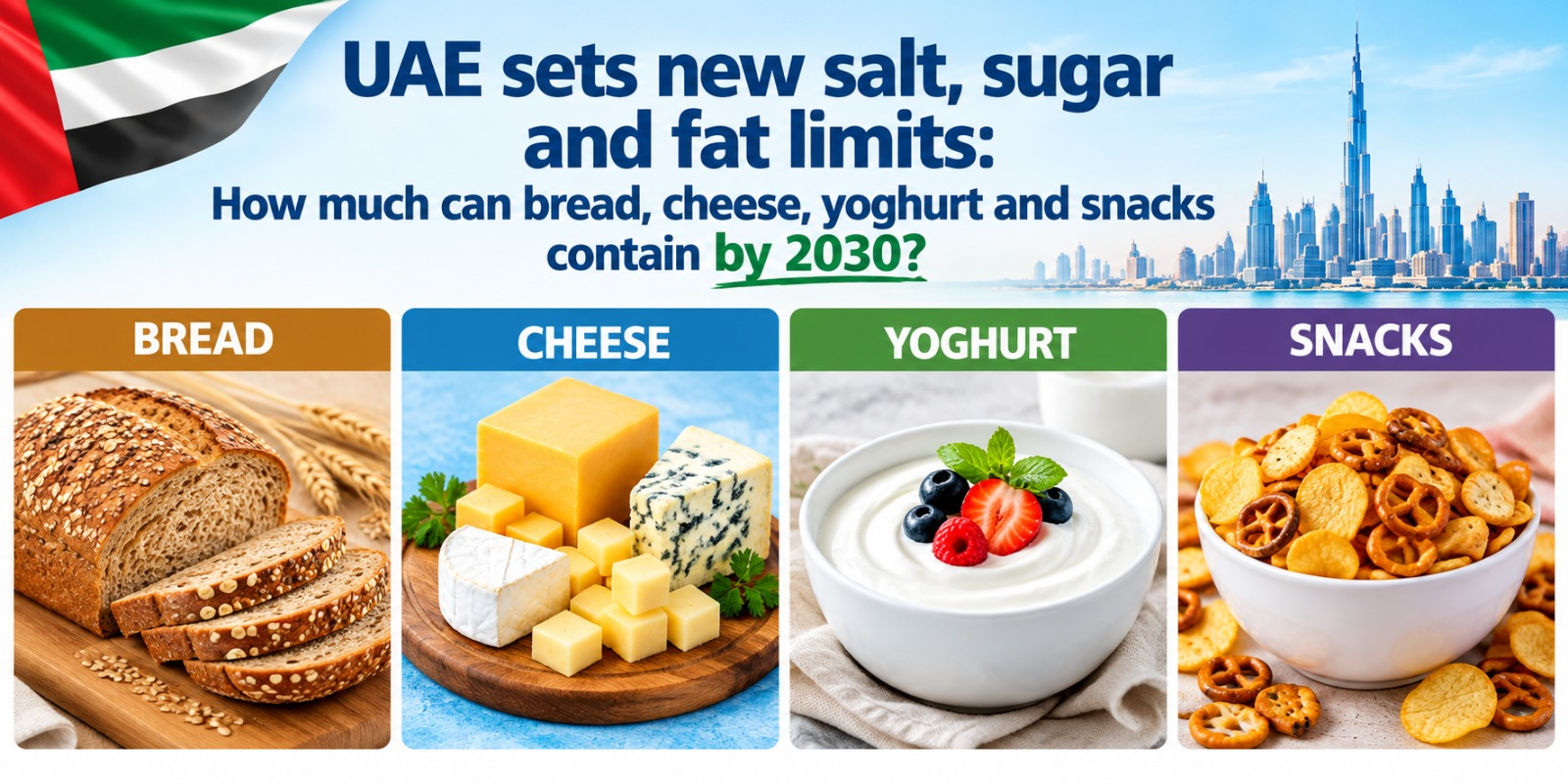
UAE Sets New Salt, Sugar and Fat Limits for Bread, Cheese, Yoghurt and Snacks by 2030
The UAE has introduced new limits on salt, sugar and fat in selected packaged food products, with manufacturers and food businesses required to meet stricter nutritional standards by the end of 2030. The initiative aims to improve the nutritional quality of everyday foods and encourage healthier eating habits across the country.
The Ministry of Health and Prevention (MoHAP) announced the implementation of the new rules on October 6, 2026. The limits will be introduced in phases and cover popular food items such as bread, flavoured yoghurt, sweetened milk drinks, processed cheese, crackers, nuts and chips.
Businesses that fail to comply with the requirements could face fines of up to AED 500,000, temporary closure or cancellation of their licence, depending on the violation.
What are the UAE’s New Salt, Sugar and Fat Limits?
The new UAE food regulations establish maximum levels of sodium, total sugars and total fat in selected products. The limits are calculated per 100 grams of the relevant food product.
The main objective is to reduce excessive consumption of ingredients associated with health problems and make healthier food choices more accessible to consumers.
Under the new framework, food manufacturers must gradually adjust their products to meet the specified limits. The final targets must be achieved by December 31, 2030, at the latest.
UAE Food Limits by 2030: Bread, Yoghurt, Cheese and Snacks
The following table summarises the first-phase limits and final targets reported for selected products.
| Food product | Ingredient | First-phase limit per 100g | Final limit by 2030 |
| Leavened bread | Sodium | 444 mg | 370 mg |
| Leavened bread | Total sugars | 6 g | 5 g |
| Leavened bread | Total fat | 8.4 g | 7 g |
| Flatbread | Sodium | 384 mg | 320 mg |
| Flatbread | Total sugars | 6 g | 5 g |
| Flatbread | Total fat | 8.4 g | 7 g |
| Sweetened milk drinks, including milk alternatives | Total sugars | 9.6 g | 8 g |
| Flavoured yoghurt or laban | Total sugars | 12 g | 10 g |
| Salted crackers | Sodium | 696 mg | 580 mg |
| Salted nuts and seeds | Sodium | 336 mg | 280 mg |
| Pretzels | Sodium | 912 mg | 760 mg |
| Potato, vegetable and grain-based extruded snacks and chips | Sodium | 564 mg | 470 mg |
| Spreadable processed cheese | Sodium | 864 mg | 720 mg |
| Other processed cheese | Sodium | 1,200 mg | 1,000 mg |
1. New Salt, Sugar and Fat Limits for Bread
Bread is one of the everyday food products covered by the new rules. Both leavened bread and flatbread will need to meet specific limits for sodium, sugar and total fat.
For leavened bread, the sodium limit will move from 444mg in the first phase to 370mg per 100g by 2030. The maximum sugar content will fall from 6g to 5g, while total fat will decrease from 8.4g to 7g per 100g.
For flatbread, the sodium limit will be reduced from 384mg to 320mg per 100g. Its sugar and fat limits will follow the same targets as leavened bread.
These changes are intended to improve the nutritional profile of widely consumed bread products without requiring consumers to stop eating them.
2. UAE Introduces Sugar Limits for Flavoured Yoghurt and Milk Drinks
Sweetened dairy products and milk alternatives are also included in the new regulations.
The maximum total sugar content for sweetened milk drinks, including milk alternatives, will decrease from 9.6g in the first phase to 8g per 100g by 2030.
For sweetened or flavoured yoghurt and laban, the limit will fall from 12g to 10g per 100g.
The rules focus on reducing added or processed sugar in the specified product categories. Consumers can continue comparing nutrition labels when choosing dairy products and alternatives.
3. Lower Sodium Limits for Chips, Crackers and Salty Snacks
Popular packaged snacks are another major category covered by the UAE’s new food standards.
The sodium limit for salted crackers will decrease from 696mg to 580mg per 100g. For salted nuts and seeds, the maximum will fall from 336mg to 280mg.
Pretzels will have a sodium limit of 760mg per 100g by 2030, compared with the first-phase limit of 912mg.
For extruded snacks and chips made from potatoes, sweet potatoes, vegetables or grains, the sodium limit will decrease from 564mg to 470mg per 100g.
These reductions are part of a broader effort to lower sodium consumption and improve the nutritional quality of packaged snacks sold in the UAE.
4. New Sodium Limits for Processed Cheese
Processed cheese products will follow a separate implementation schedule under the second group of regulated foods.
For spreadable processed cheese, the first-phase sodium limit is 864mg per 100g, decreasing to 720mg by the end of 2030.
For other processed cheese products, the maximum sodium level will fall from 1,200mg to 1,000mg per 100g.
Businesses handling these products must comply with the first-phase limits within the specified period, which is different from the timeline for the first group of foods. The final limits still apply by December 31, 2030.
When Will the New UAE Food Regulations Take Effect?
MoHAP began implementing the resolution on October 6, 2026. The compliance deadlines depend on the category of food product.
First group of products: Businesses must meet the first-phase maximum limits within a period not exceeding nine months from the date the resolution takes effect. They must then continue reducing the targeted ingredients to reach the final limits by December 31, 2030.
Second group — processed cheese: Businesses must meet the first-phase limits within a period not exceeding two years and three months from the effective date. The final limits must also achieved by December 31, 2030.
The resolution also addresses existing stock manufactured or imported before it takes effect. Such products may remain on sale for no more than one year from the effective date or until their expiry, whichever comes first, subject to the resolution’s requirements.
Which Food Products and Businesses Are Covered?
The regulations apply to packaged food products within the specified categories, whether manufactured locally in the UAE or imported.
They also cover food establishments involved in handling these products, including businesses operating in free zones.
The regulated activities span the food supply chain, including:
- Production and manufacturing
- Preparation and processing
- Packaging and transportation
- Importing and storage
- Distribution and serving
- Display and sale
Products manufactured or imported for direct export or onward export outside the UAE are generally excluded, unless they are traded within the country.
What are the Penalties for Violating the New UAE Food Rules?
Food establishments that fail to meet the new maximum limits may face administrative penalties.
Depending on the violation, these can include:
- A formal warning.
- An administrative fine ranging from AED 5,000 to AED 500,000.
- Administrative closure for a period of up to six months.
- Cancellation of the establishment’s licence or approval, in coordination with the relevant licensing authority.
Federal and local health authorities, working with MoHAP and other relevant authorities, are responsible for monitoring compliance and implementing the rules.
Why UAE Reducing Salt, Sugar and Fat in Food?
The policy follows findings from a national health and nutrition survey that highlighted high consumption of sugar, sodium and fat among people aged 18 to 69.
According to figures reported by Emirates 24|7, 27.3% of the population surveyed exceeded recommended sugar intake, while 96.2% exceeded recommended sodium intake. More than half exceeded recommended fat intake.
By setting maximum levels for selected food products, the UAE aims to improve nutritional standards, support healthier food choices and help address obesity and other non-communicable diseases associated with unhealthy diets.
Frequently Asked Questions
1. What are the new UAE salt, sugar and fat limits?
The UAE has introduced maximum levels for sodium, total sugars and total fat in selected packaged foods. The rules cover products such as bread, sweetened milk drinks, flavoured yoghurt, processed cheese and salty snacks, with final limits required by December 31, 2030.
2. When must UAE food manufacturers comply with the new limits?
The first group of products must meet its initial limits within nine months of the resolution’s effective date. The processed cheese category has a separate initial compliance period of up to two years and three months. Final limits apply by December 31, 2030.
3. Which everyday foods affected by the new regulations?
The specified categories include leavened bread, flatbread, sweetened milk drinks, flavoured yoghurt or laban, salted crackers, salted nuts and seeds, pretzels, certain chips and extruded snacks, and processed cheese.
4. What is the maximum fine for non-compliance?
Food establishments that violate the rules could face administrative fines ranging from AED 5,000 to AED 500,000, along with other possible penalties.
5. Do the new UAE food limits apply to imported products?
Yes. The rules cover qualifying packaged foods manufactured in the UAE or imported into the country, as well as establishments handling those products. Certain goods intended exclusively for export excluded unless traded within the UAE.
6. Will consumers need to stop buying bread, cheese or snacks?
No. The regulation sets maximum ingredient levels for specified food categories. It requires businesses to adjust qualifying products to meet the applicable limits rather than prohibiting these foods altogether.
Conclusion
The UAE’s new salt, sugar and fat limits represent a significant change in food standards, with phased reductions planned through 2030. From bread and flavoured yoghurt to processed cheese and packaged snacks, the rules aim to improve the nutritional quality of commonly consumed products.
Consumers can continue checking food labels, while manufacturers, importers and retailers should review the requirements for their product categories and prepare for the relevant compliance deadlines.